
Introduction to Web Design
Web design stands as a fundamental pillar in the online presence of any business or individual. In the contemporary digital landscape, a website serves as the first point of contact between an entity and its audience. Hence, the design and functionality of this platform are paramount in making a lasting impression.
Effective web design extends far beyond mere visual appeal. It encompasses a comprehensive approach that integrates usability, accessibility, and performance. In the United Kingdom, where digital engagement continues to soar, a well-designed website can significantly influence a business’s ability to thrive in a competitive environment.
A crucial aspect of web design is its ability to cater to user expectations. Users today are more discerning and have higher standards for online interactions. They expect websites to be easy to navigate, quick to load, and visually engaging. Failing to meet these expectations can result in lost opportunities and diminished credibility. Therefore, businesses must prioritise web design to ensure they meet and exceed user expectations.
Another vital element of web design is its role in establishing credibility and trust. A website that looks professional and functions seamlessly communicates reliability and authority. This is particularly important in an era where online scams and fraudulent activities are rampant. Users are more likely to trust a site that appears well-maintained and user-centric. Consequently, investing in quality design is an investment in building and maintaining trust with an audience.
Additionally, web design plays a significant role in guiding user behaviour. The strategic placement of elements, such as menus, buttons, and images, can influence how users interact with the site. By directing attention to key areas, businesses can guide users through a desired journey, whether that’s learning about a product, making a purchase, or contacting the business. Effective design leverages these elements to create a seamless and intuitive user journey.
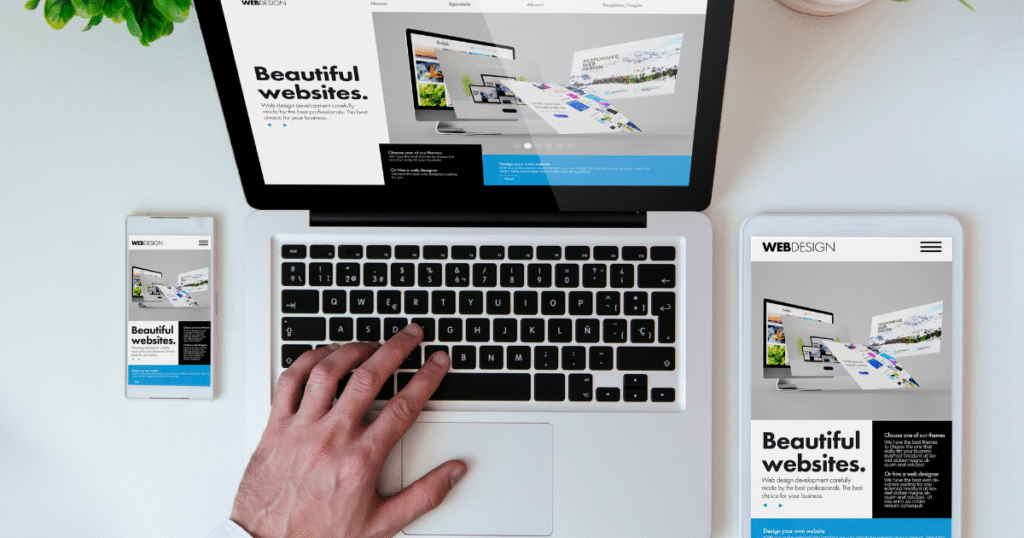
Responsive design is another cornerstone of modern web design. With the proliferation of mobile devices, it is essential for websites to function optimally across various screen sizes and devices. A responsive design ensures that a site is accessible and functional, whether accessed via a smartphone, tablet, or desktop computer. This adaptability not only improves user experience but also broadens the reach of the website, as more users are able to access it from different devices.
Web design also significantly impacts loading times and overall site performance. Fast loading times are critical in retaining user attention and reducing bounce rates. Users are less likely to abandon a site that loads quickly and performs smoothly. Web designers must optimise various elements, such as images and scripts, to ensure efficient performance. In doing so, they enhance user satisfaction and engagement, which are key metrics for any successful website.
Moreover, web design must consider the aspect of future scalability. A website should be designed with potential growth in mind, allowing for easy updates and expansions as the business evolves. This foresight ensures that the website remains relevant and functional as new technologies and trends emerge. Scalability is particularly important for businesses anticipating growth and needing their online presence to evolve accordingly.
Enhancing User Experience
An outstanding user experience is at the core of effective web design, facilitating ease of use and creating a positive impression on visitors. Clear and intuitive navigation systems are fundamental; they ensure users can effortlessly locate the information they need. This reduces frustration and encourages prolonged engagement with the website.
Consistency in design elements, such as fonts, colour schemes, and layout, also plays a critical role in enhancing user experience. Uniformity in these elements helps in creating a cohesive look and feel, which in turn makes the website more user-friendly. When users encounter a site that is aesthetically pleasing and easy to navigate, they are more likely to explore further and spend more time engaging with the content.
Another critical aspect is the speed at which a site loads. Websites that load quickly are favoured by users and search engines alike. Slow loading times can lead to increased bounce rates, as users are often impatient and may leave the site if it takes too long to load. By optimising images, scripts, and other elements, web designers can ensure that a site performs efficiently, thus retaining user attention and reducing abandonment rates.
Interactive elements such as buttons, forms, and multimedia should also be carefully designed to enhance user experience. These elements should be intuitive and responsive, providing immediate feedback to user actions. For instance, buttons should change appearance when hovered over, and forms should be easy to fill out with clear instructions. These seemingly small details can significantly impact how users perceive and interact with a website.
Mobile responsiveness is another crucial factor in modern web design. As more users access websites from mobile devices, it is imperative that a site is fully functional and visually appealing across all screen sizes. A responsive design ensures that content is easily readable and navigation is straightforward, regardless of the device being used. This adaptability not only improves user experience but also expands the website’s reach to a broader audience.
Accessibility is another vital consideration. Ensuring that a website is usable by people with disabilities is not only a legal requirement but also a mark of a user-centric approach. Features such as alt text for images, keyboard navigability, and sufficient contrast for text readability are essential. These elements ensure that all users, regardless of their abilities, can interact with the site effectively.
The strategic use of whitespace, or negative space, is also a powerful tool in web design. Whitespace helps to reduce clutter and allows users to focus on the key elements of a page. It makes the content more digestible and can guide users through the site more smoothly. By using whitespace effectively, designers can create a clean and organised interface that enhances readability and overall user satisfaction.
Feedback mechanisms such as surveys, user testing, and analytics are invaluable for continuous improvement. These tools provide insights into user behaviour and preferences, allowing designers to make informed adjustments. Regularly updating and refining the design based on user feedback ensures that the website remains relevant and user-friendly.
Incorporating these elements into web design can significantly enhance user experience, leading to increased user engagement and satisfaction. A well-designed website not only meets but exceeds user expectations, creating a positive interaction that can lead to repeat visits and sustained interest.
Building Brand Identity
Establishing a strong brand identity is a crucial aspect of effective web design. Through the use of visual and functional elements, a website can communicate a brand’s values, mission, and ethos. This communication begins with the design’s foundational elements, such as logos, colour schemes, and typography. These components should not only be visually appealing but also consistent across all digital and physical platforms to ensure cohesive branding. This uniformity helps users instantly recognise and associate specific elements with the brand, fostering a sense of familiarity and trust.
Logos play a vital role in brand recognition. A well-designed logo should be prominently featured on a website, often in the header, footer, or as a favicon. It acts as the visual anchor of the site, reinforcing brand identity with every page a user visits. The colour scheme of a website should reflect the brand’s personality and values. For instance, a company promoting eco-friendly products might use greens and earthy tones, while a tech firm could opt for sleek, modern colours like blues and greys. Colour consistency across the website helps create a unified and professional look.
Typography is another critical element that can significantly impact how a brand is perceived. The choice of fonts should align with the brand’s image, whether it’s modern, traditional, playful, or formal. Consistent use of typography not only enhances readability but also strengthens the brand’s identity. For instance, using the same font styles for headings, subheadings, and body text across the site creates a cohesive and polished appearance.
Imagery and graphics should also align with the brand’s messaging. High-quality, relevant images can evoke emotions and create connections with users. Whether it’s through photographs, illustrations, or icons, the visual content should support the brand’s narrative and enhance the user experience. Consistent use of imagery styles, such as black and white photography or vibrant illustrations, can further solidify brand identity.
The overall layout and structure of the website should reflect the brand’s ethos. A minimalist layout might be suitable for a luxury brand, emphasising sophistication and elegance, while a more dynamic and interactive design could be apt for a creative agency, showcasing innovation and creativity. The website’s tone of voice, conveyed through its content, should also be consistent with the brand’s personality. Whether it’s formal, conversational, or quirky, the language used should resonate with the target audience and reinforce the brand’s identity.
Interactivity and user engagement features should mirror the brand’s approach to customer relations. For example, a brand that prides itself on customer service might include live chat options, comprehensive FAQ sections, and easy-to-find contact information. These features not only enhance user experience but also communicate the brand’s commitment to customer satisfaction.
Social media integration is another powerful tool in building brand identity. Links to social media profiles should be easily accessible, allowing users to engage with the brand across multiple platforms. This cross-platform presence helps to reinforce the brand’s image and ensures a seamless user experience, no matter where users encounter the brand.
Incorporating customer testimonials and reviews can also enhance brand credibility and identity. Positive feedback from satisfied customers can be showcased on the website, providing social proof and building trust with new visitors. These testimonials should be authentic and relevant, reflecting the brand’s values and customer-centric approach.
Animations and micro-interactions can add a layer of sophistication and engagement, making the user experience more enjoyable and memorable.
Boosting Search Engine Optimisation
Effective web design is integral to enhancing a site’s search engine optimisation (SEO). One of the critical elements of SEO-friendly web design is ensuring that the website is mobile-responsive. With the increasing number of users accessing the internet via smartphones and tablets, search engines like Google prioritise mobile-friendly sites in their rankings. A responsive design ensures that the website looks and functions well on all devices, thereby improving user experience and boosting SEO performance.
Another essential factor is site speed. Search engines use page loading times as a ranking signal, so it is vital to optimise elements that can slow down a site, such as large images, unminified scripts, and excessive use of plugins. Compressing images, enabling browser caching, and minimising HTTP requests can significantly enhance site speed, leading to better search engine rankings.
The structure and organisation of content also play a crucial role in SEO. A clean, logical structure makes it easier for search engine bots to crawl and index the site. This involves using appropriate header tags (H1, H2, H3, etc.), creating a clear hierarchy of information, and ensuring that each page has a unique title and meta description. These elements help search engines understand the content and relevance of each page, which can improve visibility in search results.
Internal linking is another powerful strategy for boosting SEO. By linking to relevant pages within the site, businesses can help search engines discover more content and understand the site’s structure. Internal links also enhance user experience by guiding visitors to related information, thereby increasing time spent on the site and reducing bounce rates.
Quality content is at the heart of SEO. Search engines favour websites that provide valuable, relevant, and original content. This means regularly updating the site with fresh content, such as blog posts, articles, and videos, which can attract and retain visitors. Incorporating relevant keywords naturally within the content is essential for ranking in search results. However, it is important to avoid keyword stuffing, which can be penalised by search engines.
Optimising images is another critical aspect of SEO. This involves using descriptive file names, alt text, and captions to help search engines understand the content of the images. Alt text is particularly important for accessibility and can also improve image search rankings. Ensuring that images are properly compressed and optimised for web use can enhance site speed and overall SEO performance.
Another important consideration is the use of secure sockets layer (SSL) certificates. HTTPS is now a ranking factor for Google, meaning that secure sites are given preference in search results. An SSL certificate not only boosts SEO but also enhances user trust by ensuring that their data is transmitted securely.
User engagement metrics, such as click-through rates (CTR), time on site, and bounce rates, are also considered by search engines when ranking sites. A well-designed website that is easy to navigate and visually appealing can positively impact these metrics. High engagement indicates that users find the site useful and relevant, which can boost its SEO performance.
Lastly, integrating social media sharing buttons can enhance SEO by increasing the visibility of the site’s content. When users share content on social media platforms, it can generate backlinks, drive traffic, and improve the site’s overall authority and ranking.
Incorporating these design strategies can significantly improve a website’s search engine optimisation, leading to higher visibility and better performance in search engine results.
Increasing Accessibility
Incorporating accessibility into web design ensures that websites are usable by everyone, including people with disabilities. This involves a range of practices aimed at making content and functionality accessible to all users. One fundamental aspect is the use of alt text for images, which provides a textual description for those who cannot see the image. Alt text is not only beneficial for screen reader users but also supports better indexing by search engines.
Ensuring sufficient contrast between text and background is another critical factor. Adequate contrast improves readability for users with visual impairments, including colour blindness. Designers should test different colour combinations to ensure that text remains legible for all users. Tools and guidelines, such as the Web Content Accessibility Guidelines (WCAG), can assist in determining appropriate contrast levels.
Keyboard navigability is vital for users who cannot use a mouse. Websites should be fully operable using keyboard inputs, allowing users to navigate through links, forms, and other interactive elements. This can be achieved by ensuring that all functionalities are accessible via keyboard shortcuts and that focus indicators are clearly visible. A well-implemented tab order ensures a logical progression through interactive elements.
Incorporating accessible forms is another essential practice. Form fields should be clearly labelled, and instructions or errors should be communicated in an understandable manner. Input fields should have associated labels that are read by screen readers, and error messages should be easily identifiable and provide specific guidance on how to correct mistakes.
Semantic HTML plays a crucial role in accessibility. Using proper HTML tags ensures that content is structured logically, making it easier for screen readers to interpret. Headings should follow a hierarchical order, starting with
for the main title and progressing to
,
, and so on. Lists, tables, and other structural elements should be appropriately marked up to convey their meaning accurately.Interactive elements like buttons and links should have clear, descriptive text. Ambiguous labels such as “click here” do not provide enough context for users relying on screen readers. Instead, labels should indicate the action or destination, such as “Submit Form” or “Read More About Our Services.” Additionally, ensuring that these elements are large enough to be easily clicked or tapped enhances usability for all users.Video and audio content should include captions and transcripts. Captions provide a text version of spoken dialogue and essential sounds, benefiting users who are deaf or hard of hearing. Transcripts offer a text-based alternative to video content, making it accessible to users with hearing impairments or those who prefer reading.Responsiveness also contributes to accessibility. Websites should be designed to adapt to various screen sizes and orientations, ensuring a consistent experience across devices. This is particularly important for users who rely on screen magnifiers or other assistive technologies.Finally, continuous testing and feedback are crucial for maintaining an accessible website. Regularly conducting accessibility audits and user testing with people who have disabilities can uncover issues and areas for improvement. By integrating accessibility into the design process from the beginning, businesses can create inclusive online environments that serve all users effectively.
Driving Conversion Rates
Effective web design can significantly enhance conversion rates by creating an intuitive and engaging user experience. The placement and design of calls to action (CTAs) are paramount. CTAs should be strategically positioned in areas where users are most likely to engage, such as at the end of a compelling piece of content or prominently on the homepage. Using contrasting colours for CTAs ensures they stand out, guiding users towards the desired action.
Clear and concise messaging is essential in persuading visitors to take action. The language used should be compelling and direct, leaving no ambiguity about what the user should do next. For instance, instead of a generic “Click Here,” a more specific “Get Your Free Quote” can be more effective in encouraging user interaction.
Visuals play a crucial role in driving conversions. High-quality images, videos, and graphics can capture attention and convey key messages quickly. Visuals should be relevant and support the overall narrative, helping to build a connection with the audience. For example, product images should be clear and detailed, allowing users to see exactly what they are considering purchasing.
The user journey must be seamless from start to finish. Navigation should be intuitive, allowing users to find what they need without frustration. Any barriers, such as lengthy forms or complicated checkout processes, should be minimised to prevent drop-offs. Simplifying forms by only asking for essential information can make the process quicker and less daunting for users.
Trust signals, such as customer testimonials, security badges, and money-back guarantees, can also enhance conversion rates. These elements provide reassurance and build credibility, making users more likely to complete their actions. Displaying reviews and ratings can offer social proof, encouraging new users to trust the brand and make a purchase.
Personalisation can further drive conversions by making users feel valued. Tailoring content, offers, and recommendations based on user behaviour and preferences creates a more relevant and engaging experience. For instance, showing personalised product recommendations based on previous browsing history can increase the likelihood of a purchase.
Optimising the site for mobile users is essential, as a significant portion of traffic comes from mobile devices. Ensuring that the mobile experience is just as smooth and visually appealing as the desktop version can prevent potential customers from abandoning their actions.
By focusing on these key aspects of web design, businesses can create a more compelling and user-friendly experience, ultimately driving higher conversion rates.